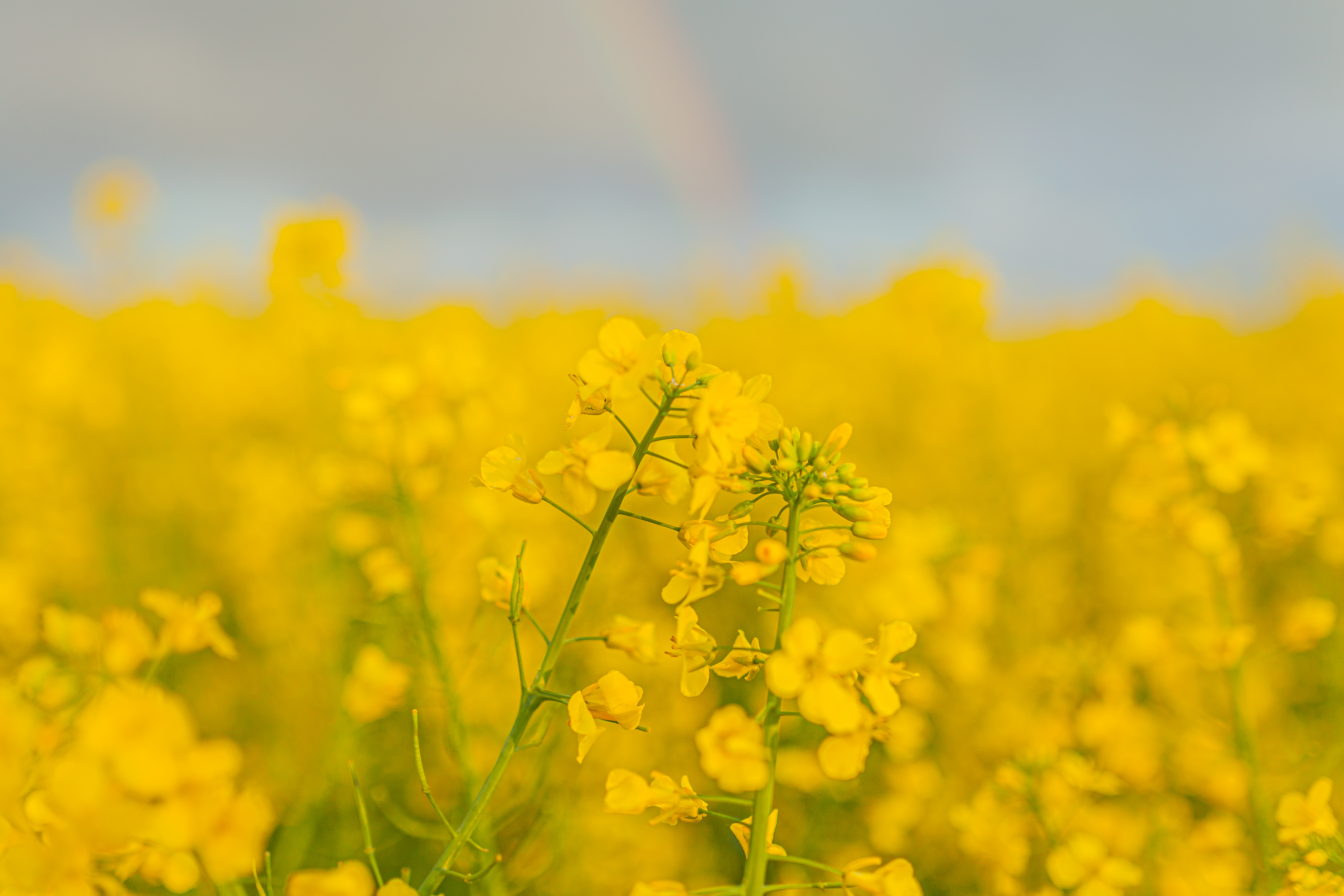
Rapeseed Newsletter

Dear Farmers,

The new rapeseed season is just around the corner. In our latest newsletter, we’ve compiled the most important recommendations for you regarding variety selection, soil preparation, seeding, fertilization, and snail and weed control.

Precisely because of the current weather conditions, it is very important this year to establish the crops carefully to ensure the best possible start.

We wish you a successful rapeseed season and look forward to supporting you with our recommendations.

Contents:

1. Recommended Varieties
2. Soil Preparation
3. Planting Rapeseed
4. Fertilization
5. Snail Control
6. Herbicides


1. Variety Recommendations / Seed Treatment / Crop Failure Insurance

Regarding seed treatment: The standard seed treatment with Scenic Gold prevents crop loss due to emergence diseases and downy mildew. Depending on the seed producer, this may be supplemented with micronutrients, for example.

Since we experienced some serious problems with the rapeseed flea beetle last year, we recommend using the Lumiposa seed treatment, at least on at-risk fields (near fields with previous rapeseed crops). It protects rapeseed from the rapeseed flea beetle until the true-leaf stage and also has an additional effect on the white cabbage fly. At the same time, the active ingredient supports growth from the germination phase through the true-leaf stage. This helps the rapeseed “outgrow” the pests.

Minimizing Risk with Replanting Insurance:
Farmers who grow KWS varieties can register on the KWS website and take out free replanting insurance. No matter the reason why the rapeseed has to be replanted or resown, the KWS Rapeseed Value-Added Service will reimburse 50% of the costs.

For those who are a bit unsure because of the terms, this could certainly be an interesting way to protect themselves.

  • KWS Vamos (1.5 million seeds per unit)
    Vamos has consistently ranked among the top varieties in the LSV and is therefore one of the leading varieties in terms of grain and oil yield. Moderate and uniform maturity of grain and straw. Flexible in terms of planting time—also suitable for early planting, as it is completely resistant to bolting in the fall. An all-around solution for every situation.
  • KWS Nautilos (1.5 million seeds/unit)
    Alongside Vamos, a true top performer from KWS. Offers excellent adaptability to a wide range of growing conditions and flexibility in sowing dates. Thanks to its rapid early growth, it is particularly well-suited for harsh growing conditions and late sowing. Despite its vigorous growth, it is very stable and does not tend to become overgrown in the fall.
    Very well suited for all sites; mulch seeding is easily possible.
  • Karat Rapool (1.5 million seeds/unit)
    A particularly healthy and high-yielding variety with 9–9–8 ratings for grain yield, oil yield, and oil content. Thanks to its unique resistance package, it is a “breeder’s favorite.” This robust, large-framed plant type is particularly well-suited for tight crop rotations. Despite rapid early growth, it is bolting-resistant in the fall and is therefore also suitable for earlier planting dates.
  • LG Ambrosius (1.5 million seeds/unit)
    A variety with very stable yields and high oil content. Medium-growing type with very good lodging resistance and balanced fall development, making it particularly suitable for early and mid-season planting dates. Despite its good resistance profile, it is one of the varieties with the best threshing characteristics thanks to the straw’s minimal delay in ripening.

Overview of Winter Rapeseed Varieties for 2026

Variety
-Hybrid Line

's Progress Ahead of Winter
Start of flowering
Delayed maturation
of straw
Maturity Plant
length

's inclination relative to the bearing
Thousand-grain weight
Grain-
yield
Oil-
yield
Oil content
KWS Vamos H 5 3 5 5 6 3 4 9 9 8
KWS Nautilos H 5 3 4 5 6 3 3 8 9 8
Karat* H – 4 5 5 6 3 4 9 9 8
LG Ambrosius H 5 3 4 5 5 3 4 8 8 8
Daktari H 5 4 4 5 5 3 3 8 8 8
Detlef H 5 3 6 5 5 3 4 9 9 8

Ratings from the Descriptive Variety List (BSA) 2025

* Scores from breeder evaluation / preliminary assessment

H = Hybrid


2. Soil Preparation / Liming

Anyone planning to grow rapeseed should have their fields ready for planting by now. That way, the next rain (since no one really knows when it will come) can be used for sowing and germination. Those who wait until then to begin primary tillage will be wasting valuable water needed for germination.

For sowing, the goal is to prepare a medium-fine, well-compacted seedbed. Due to the prolonged drought, the soil this year is particularly prone to crumbling into “flour.” A seedbed that is too fine tends to become waterlogged, leading to emergence problems. The resulting lack of air reduces yield potential at the plant’s root collar at an early stage. Particularly when sowing after plowing, care should be taken to ensure that sufficient soil structure is maintained. Deep loosening isn’t necessary anyway, since natural loosening has already occurred due to cracks in the soil. Under current conditions, water-conserving seedbed preparation is the top priority. An optimal supply of lime is crucial for good soil structure and aeration .

Here, we recommend the Physiomax as a seedbed preparer (BBag). The stored, highly reactive algae lime forms a stable molecular structure on the surface, thereby reducing the risk of silting. It is particularly well-suited for smaller areas, as its particle size allows it to be applied using a mineral fertilizer spreader.


3. Extreme Drought – When to Sow, When to Spray?

The key to successful rapeseed cultivation is optimal seeding. Over 70% of the yield is determined by how the crop develops in the fall.

Especially given the issues with the rapeseed flea beetle, we advise against late planting dates. We consider mid-season planting dates starting on August 20 to be optimal. Even if conditions remain dry until then, we recommend planting during this time window. To ensure proper soil contact, rolling should be performed if necessary.  

However, we would wait to apply the soil herbicides ( Torso, Butisan Kombi, Butisan Gold, Fuego) until it has rained at least once. Then, spray them onto the still-moist soil as quickly as possible. The herbicide will then settle, and a stable film of the active ingredient will form on the surface. This approach also prevents too much active ingredient from being washed into the rapeseed’s germination zone and causing crop damage.

Seed size:

  • Early sowing (August 10–20)
    max. 40 viable seeds/m²
    Hybrid varieties
  • Standard Seeding (Aug. 20–25)
    40–45 viable seeds/m²
    Hybrid Varieties
  • Late planting (Aug. 26 – Sept. 8)
    45–60 viable seeds/m²
    Hybrid varieties

At 40 grains/m², one unit is sufficient for 3.75 ha.             

At 50 grains/m², one unit is sufficient for 3.00 ha.


4. Fertilization

Canola needs sufficient nitrogen for proper fall growth.

If the straw is left in the field or incorporated during mulch seeding, no more than 60 kg N/ha should be applied in the form of complete fertilizers, KAS, or manure.

If the straw has been removed, apply 40–50 kg of nitrogen per hectare.

Complete fertilizers promote winter hardiness thanks to the potassium they contain. Phosphate has a positive effect on root development.


5. Snail Control

Despite the extreme drought, there is still a residual risk of field snails this year. Special care should be taken along field edges and in fields where rapeseed was previously grown. While tillage under current conditions significantly reduces the risk, you should not lose sight of the snails. Control measures are particularly effective before the rapeseed has germinated, since the slugs then have no “choice” between slug bait and rapeseed. By conducting a test application on a small area, you can assess the infestation level even before sowing (by checking for slime trails).

If an infestation is present, the fields should be treated as soon as possible after sowing, and in any case within 3 days. Continue to monitor the fields afterward and apply additional treatment as needed.

Top Recommendation:

MetaPads

25 kg – bag | 3 kg/ha | max. 2 applications per crop per year

Gentle on beneficial insects

Wet pressing
Therefore, abrasion-resistant and dust-free, extremely dimensionally stable when wet.

Very effective at attracting birds
; takes effect very quickly in dry conditions

Distance requirement
0 m to water bodies ( observe 5 m minimum distance in Baden-Württemberg ) and non-target areas

For very wide spread widths of up to 28 m:

Metarex Inov

20 kg – bag | 5 kg/ha | max. 5 applications per crop per year
Total max. 17.5 kg/ha per year

Wet-molded
: abrasion-resistant and dust-free, with good dimensional stability when wet

Distance requirement
0 m to water bodies ( observe 5 m minimum distance in Baden-Württemberg ) and non-target areas


6. Crop Protection in Canola

Before each pass through the rapeseed field, thoroughly clean the sprayer with All-Clear Extra or Agroclean!

1. Torso

Torso has proven itself very well in recent years and continues to offer the best value for money in this segment. With its high concentration of active ingredients—metazachlor, napropamide, and quinmerac—it provides excellent basic control of all relevant weeds, as well as against blackgrass and ryegrass.

This is the standard method for plow seeding, but it is also equally suitable for mulch seeding.

Reliable and broad-spectrum weed control, including cranesbill.

Apply as a pre-emergence treatment up to the 4-leaf stage.

However, we generally recommend pre-emergence application, as this provides a more reliable way to control shepherd's purse and yellow ragwort.

3.5 L/ha Torso

+ 3.0–4.0 l/ha of Nova to improve root growth and vitality


2. Butisan Kombi and Fuego

followed by Runway/Effigo

Standard option for mulch seeding or a rough, coarse seedbed.

With problem weeds such as, in particular: cranesbill, burdock, chamomile, shepherd's purse, and pansies

First application: 1st to 5th day after sowing; otherwise, the effectiveness—especially against shepherd's purse—decreases significantly.

2.5 l/ha Butisan Kombi + 0.5 l/ha Fuego

+ 3.0–4.0 L/ha of Nova to improve root growth and vitality

This involves applying 750 g/ha of metazachlor and 500 g/l of dimethenamid-P. This corresponds to 1.5 l/ha of Metacol/Fuego and 0.7 l/ha of Spectrum. Very good broad-spectrum control, including cranesbill, and enhanced efficacy against black grass.

The best results are achieved when applied to moist soil.

Spraying approximately 3 weeks after sowing volunteer cereals

0.2 l/ha Runway + 0.8 l/ha Agil S/Batalin

+ 75 ml/ha Karate Zeon or another pyrethroid to control the rapeseed flea beetle

possibly + 0.15 l/ha of Effigo for larger thistles or burdocks


3. Fuego – LaDiva Spray Sequence

In fields with speedwell and/or black grass pressure, it is essential to apply the active ingredient metazachlor as a pre-emergence treatment:


First application, if pre-emergence treatment is necessary: 0–5 days after sowing 
1.0–1.5 L/ha Fuego


Second application when the rapeseed has 2–6 true leaves, along with volunteer grain crops 
0.25 l/ha LaDiva

+ 1.25 l/ha Focus Ultra + 1.0 l/ha Dash (better for volunteer grains)
or + 0.5 l/ha Select + 1.0 l/ha oil ( more affordable alternative, better for blackgrass)

+ 75 ml/ha of Karate Zeon or another pyrethroid to control the rapeseed flea beetle

Caution: LaDiva may only be mixed with the following herbicides :
- Fusilade Max, Focus Ultra, Panarex, Select
- Do not mix with multiple fungicides and herbicides
- Do not mix with AHL                             

If LaDiva has been sprayed, Carax, Caramba, or Efilor must not be sprayed in the fall. Therefore, it is not suitable for early planting dates.


All information has been compiled to the best of our knowledge and belief. However, we cannot provide any guarantees. Please follow the instructions for use. Use of these products is at your own risk.


If you have any questions, our field service consultants will be happy to assist you.

Sincerely,

Your Allgaier Agrarhandel


Allgaier Agrarhandel GmbH & Co. KG | Karl Allgaier | Mühlgasse 12 | 89604 Allmendingen | Germany | +49 7391 70040 | info@allgaier-agrarhandel.de | https://www.allgaier-agrarhandel.de | Managing Director: Karl Allgaier | Registration No.: HRA 723022 | Tax ID: DE283404602 |
WhatsApp Icon